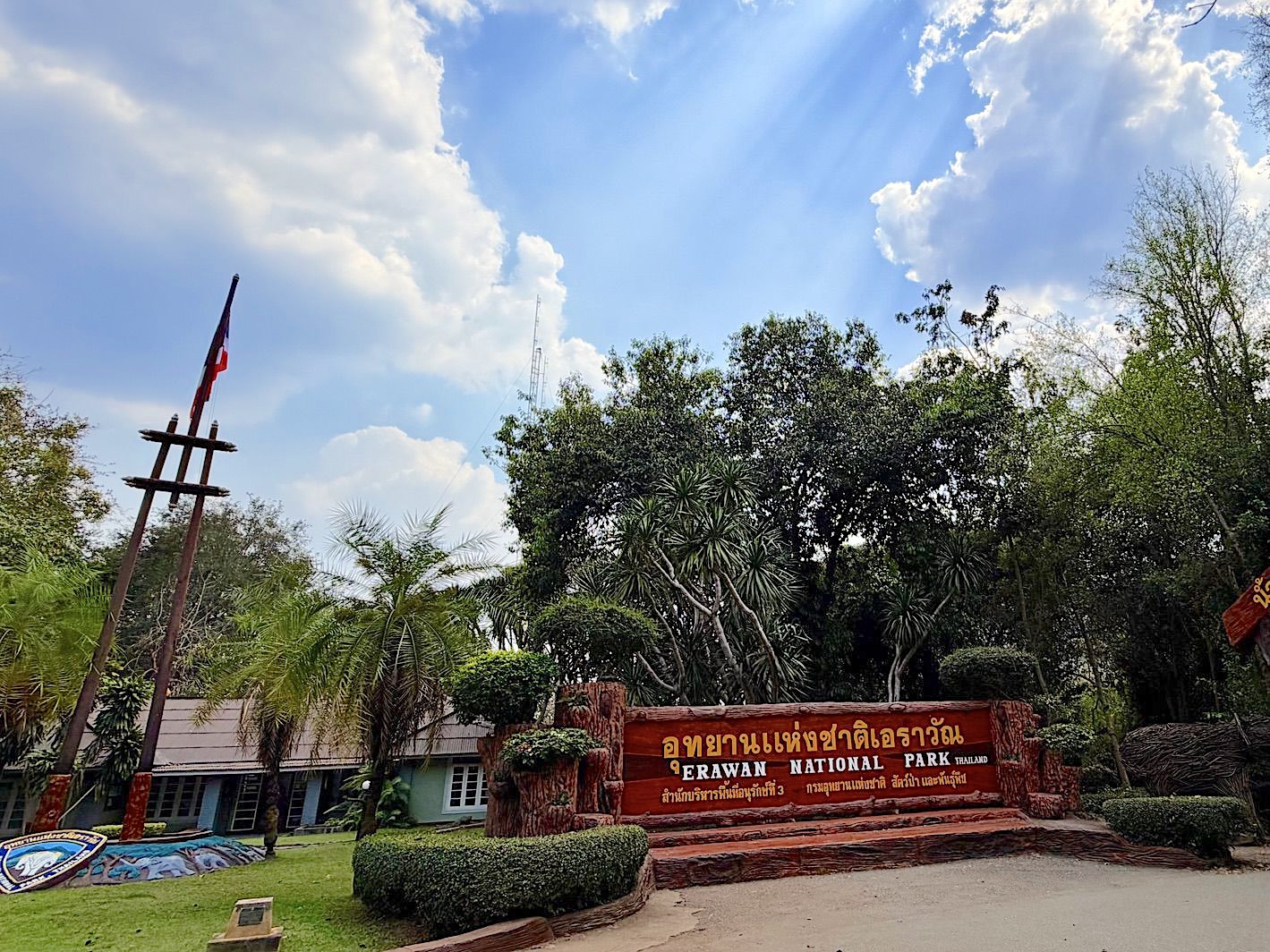
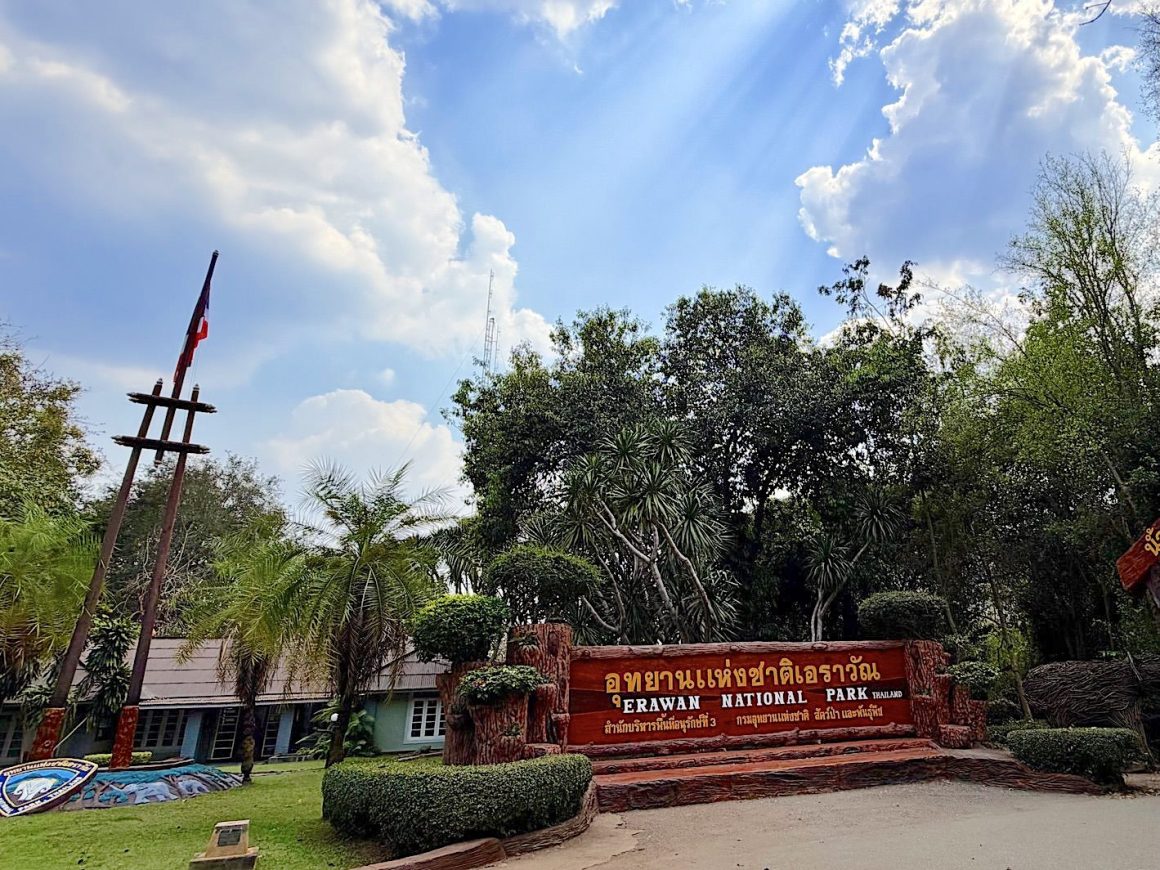
On the second day of our Kanchanaburi trip, we set aside the day for the most famous attraction in Erawan National Park—Erawan Waterfall. That morning, our thoughts were still weighed down by the history of the Death Railway. A short while later, we found ourselves surrounded by forest, fresh air, and the sound of flowing water. That is sometimes the beauty of travel: sorrow and serenity can be separated by only a single moment.
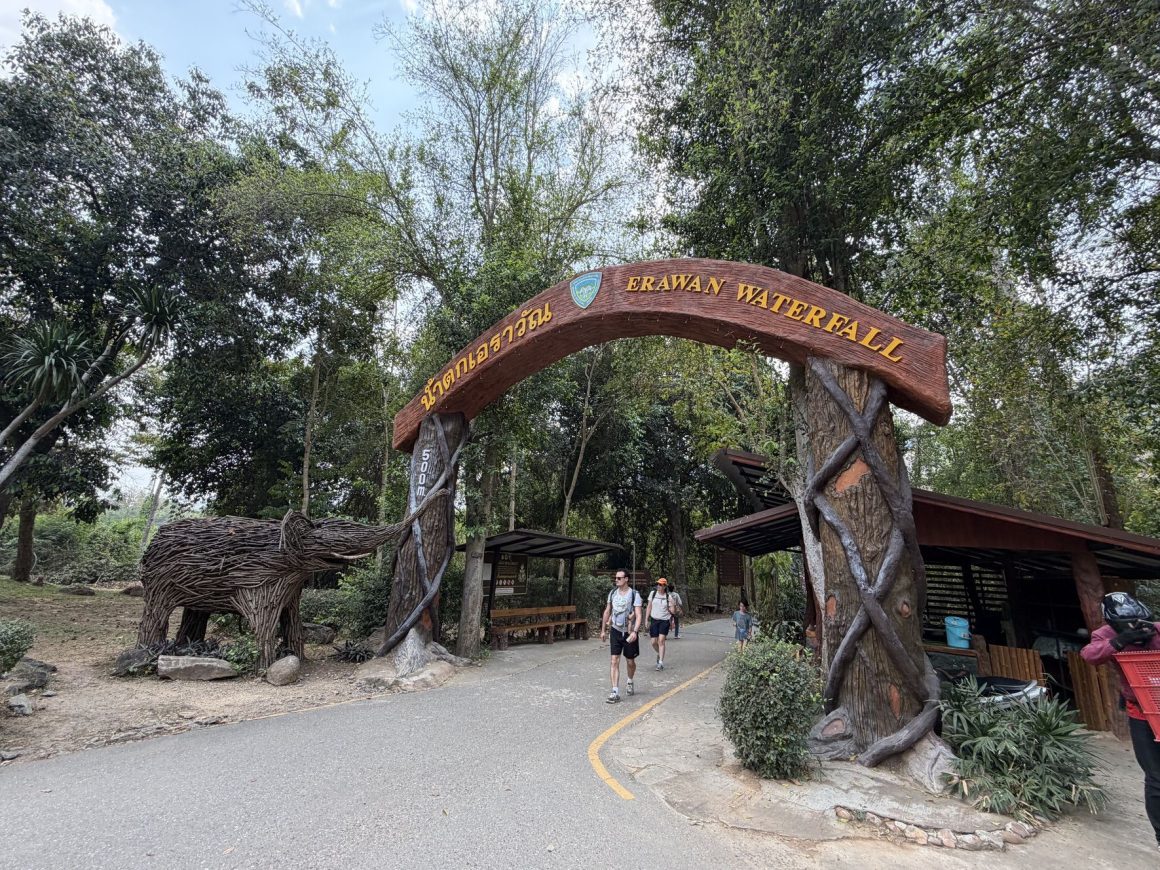
We decided to take a “straight to the top, then slowly back down” approach. Instead of spending too much time at the lower tiers, we headed directly toward the seventh tier and planned to enjoy each level on the way back. My parents were a little worried about their stamina, but I believed that as long as we took our time and walked step by step, we could make it.
Distances and Introduction to Tiers 1–7
The trail is approximately two kilometres one way, with the elevation gradually increasing at each tier. The first few sections are relatively gentle, but the later parts become steeper and include climbing over wet and slippery rocks.
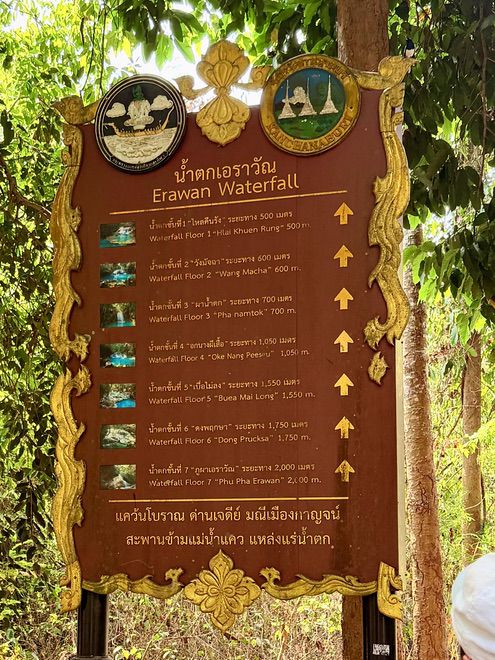
Tier 1: Hlai Khuen Rung Approximately 0.5 km from the entrance.
The first tier is the closest to the entrance. Its flow is broad and gentle, and it is usually the most crowded level. Even at the beginning of the trail, the water already displays Erawan’s distinctive turquoise colour. My mother stood beside the water and said, “It looks as if someone specially mixed this colour.”
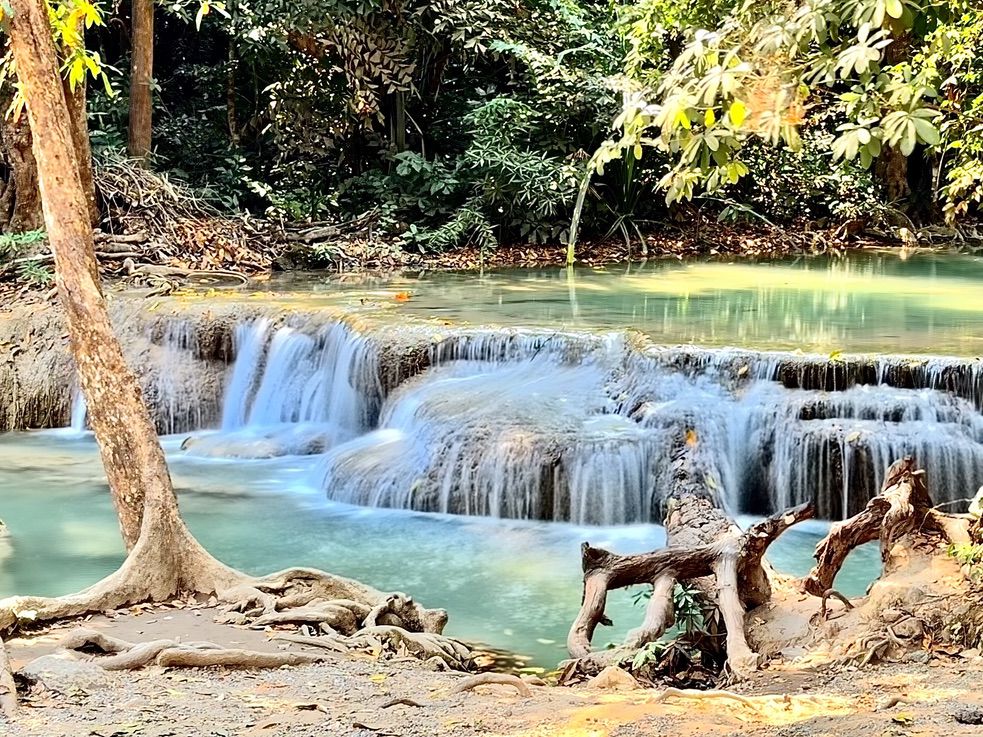
Tier 2: Wang Matcha Approximately 0.6 km from the entrance.
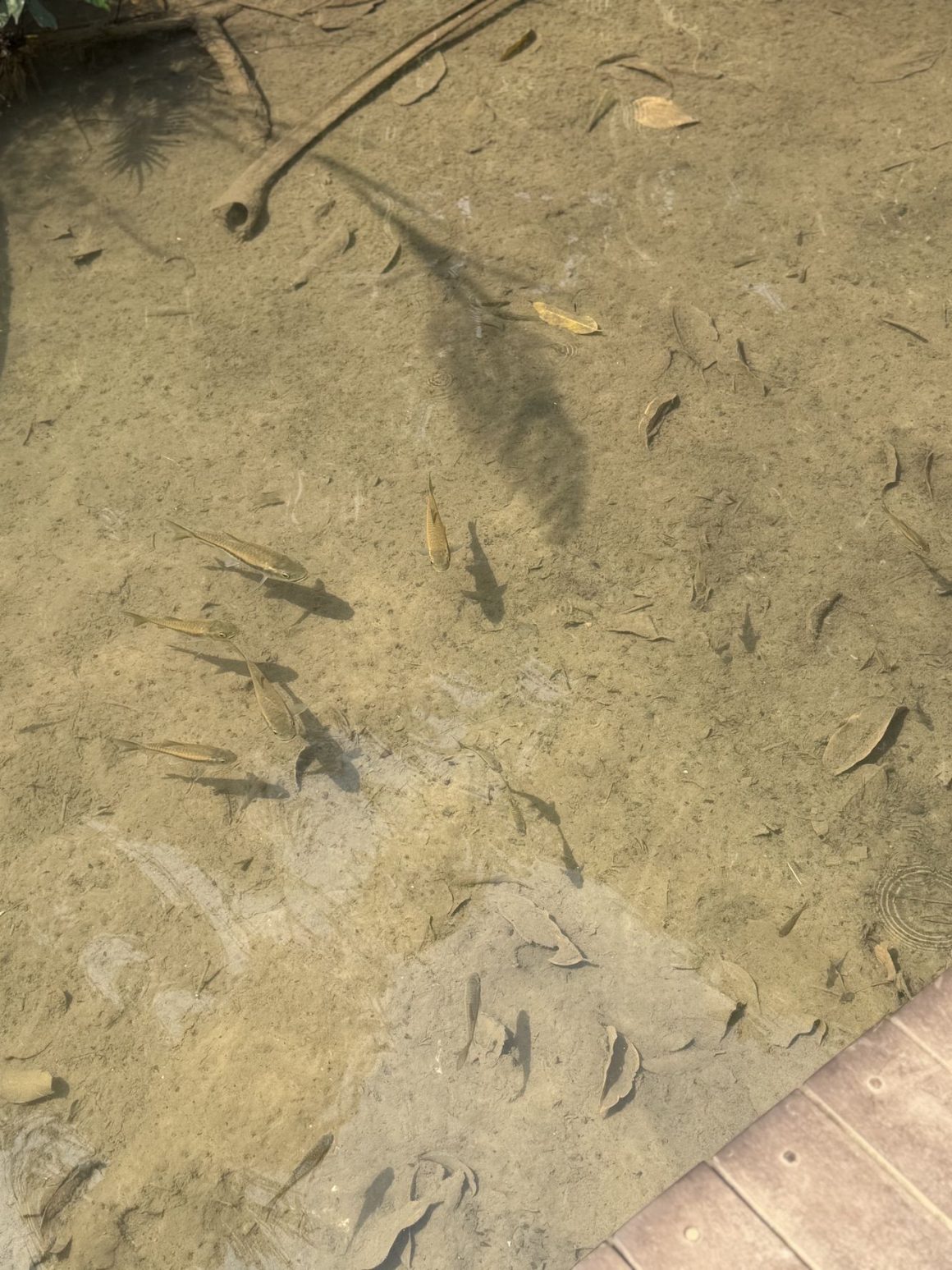
The pool here is even clearer, and small fish begin to appear in the water. When my younger brother dipped his feet into the pool, the fish immediately gathered around him, making him laugh. It was a lovely place to stop and relax, but we still had our eyes on the higher tiers.
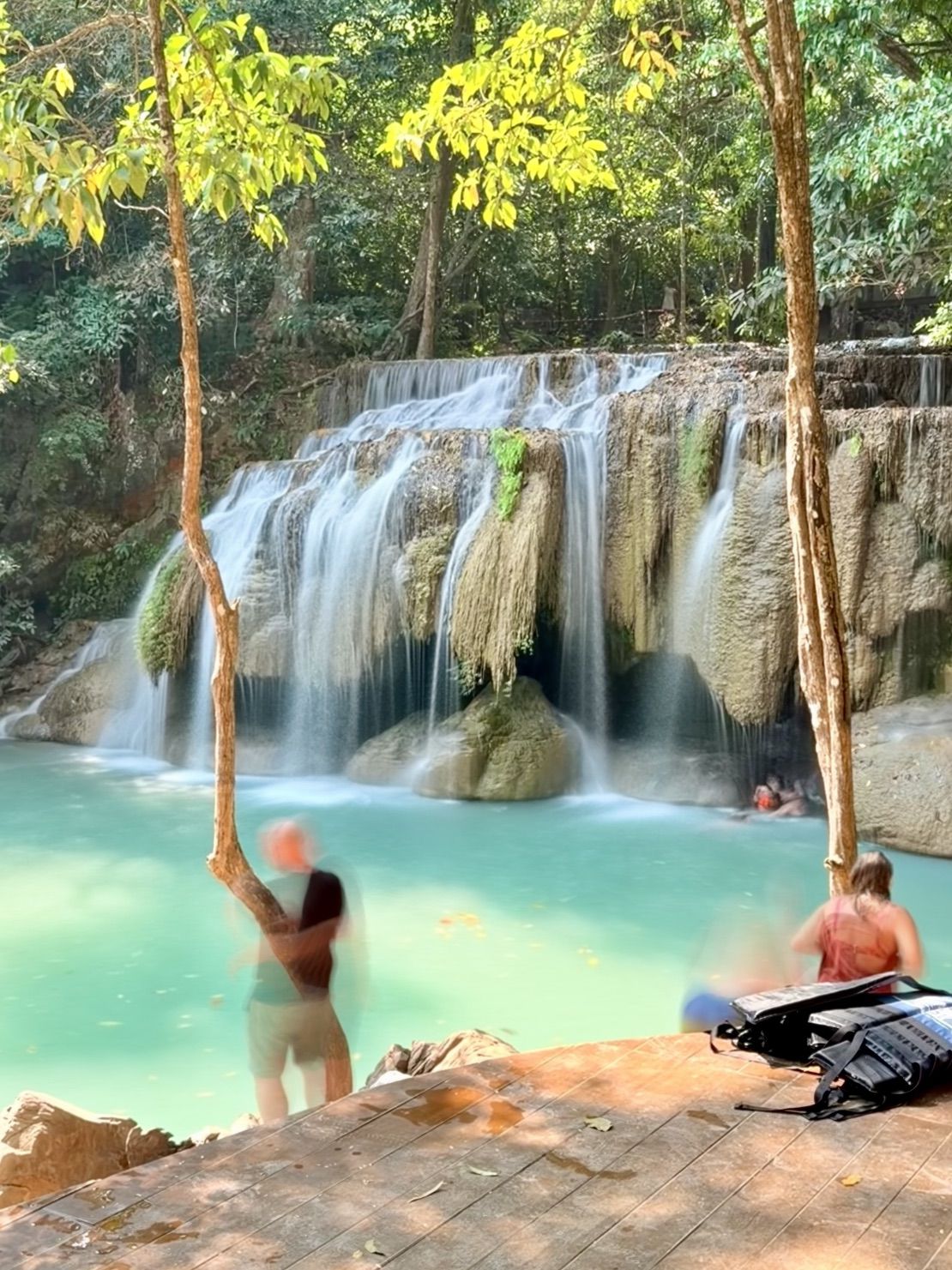
Tier 3: Pha Nam Tok Approximately 0.7 km from the entrance.
Water pours between the rocks, and the waterfall begins to show more distinct layers. My father paused here, looked at the view, and said, “Coming this far is already worth it.” But I knew that a wider and more impressive view was still waiting for us at the seventh tier.
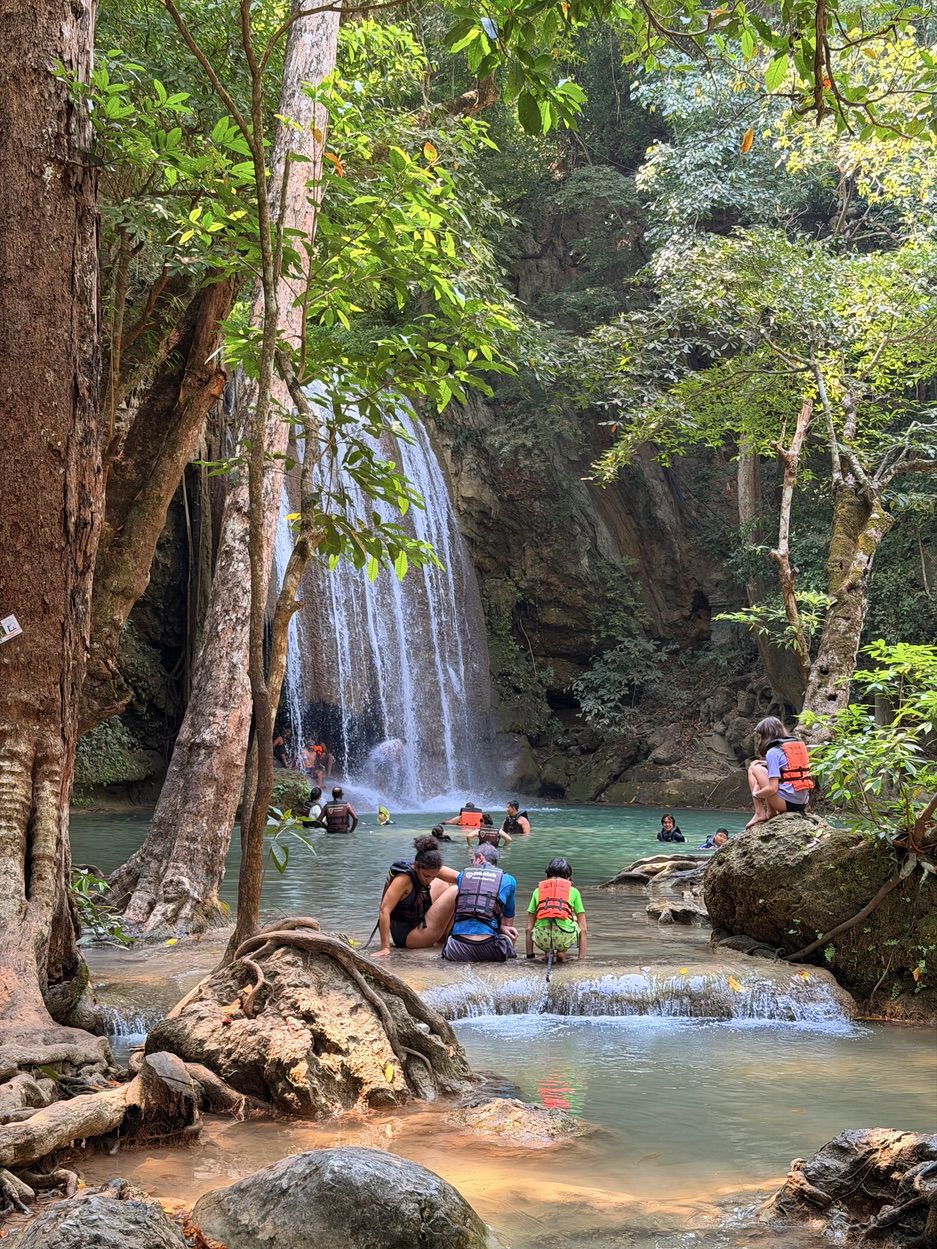
Tier 4: Oke Nang Phee Suea Approximately 1.05 km from the entrance.
From this point onward, the trail becomes increasingly wet and slippery. We had to hold the railings and move carefully. My mother walked slowly, while I followed behind and watched her take one step at a time. At that moment, I suddenly realised that time moves even faster than the water in the waterfall.
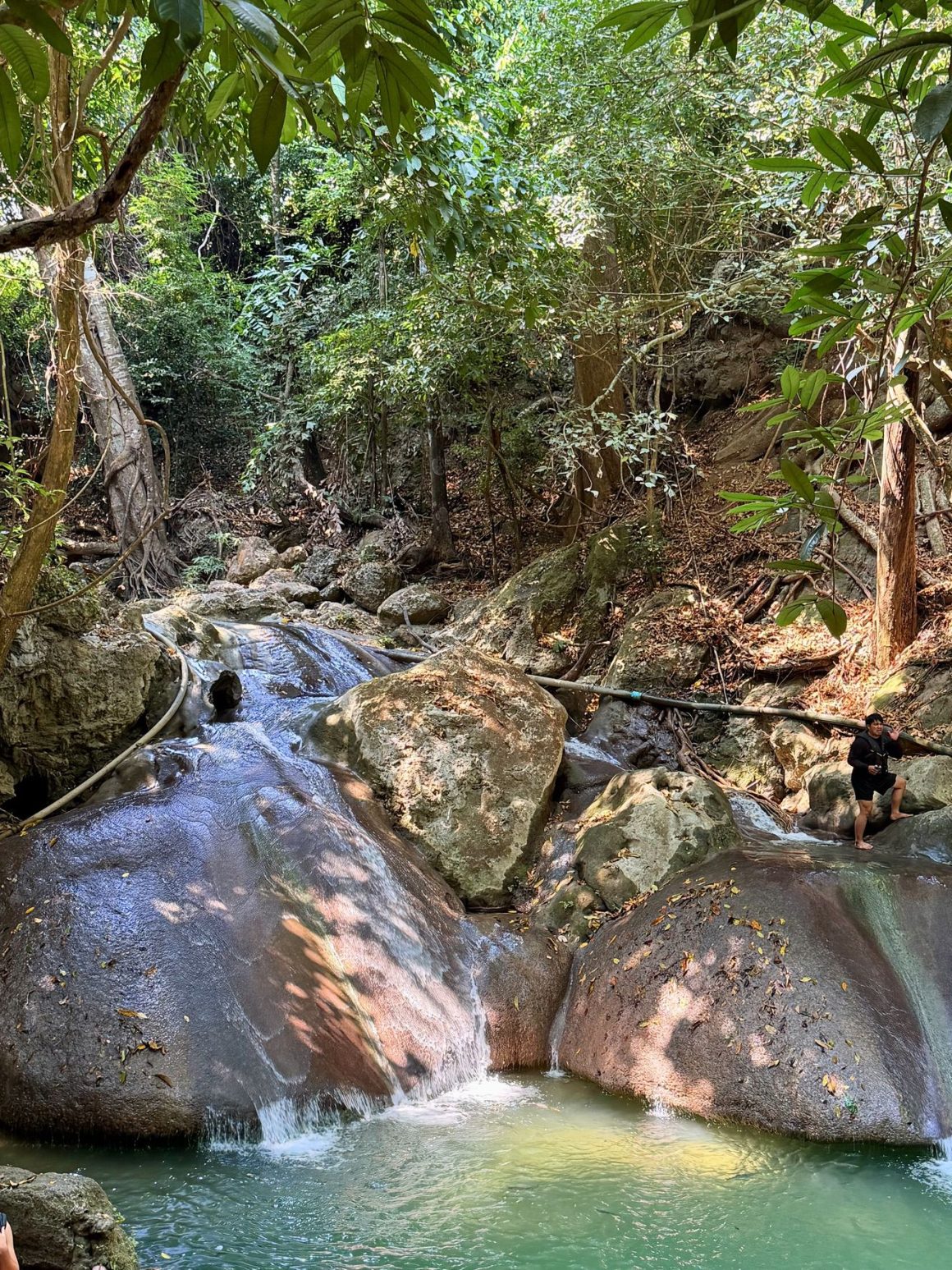
Tier 5: Buea Mai Long Approximately 1.55 km from the entrance.
Personally, the section between the fourth and fifth tiers felt like the longest part of the journey. Once we arrived, the water became softer and more delicate, flowing like layers of white silk. There were noticeably fewer visitors here, and the surroundings were much quieter. The sounds of insects and flowing water blended together, making it easy to forget that the city even existed.
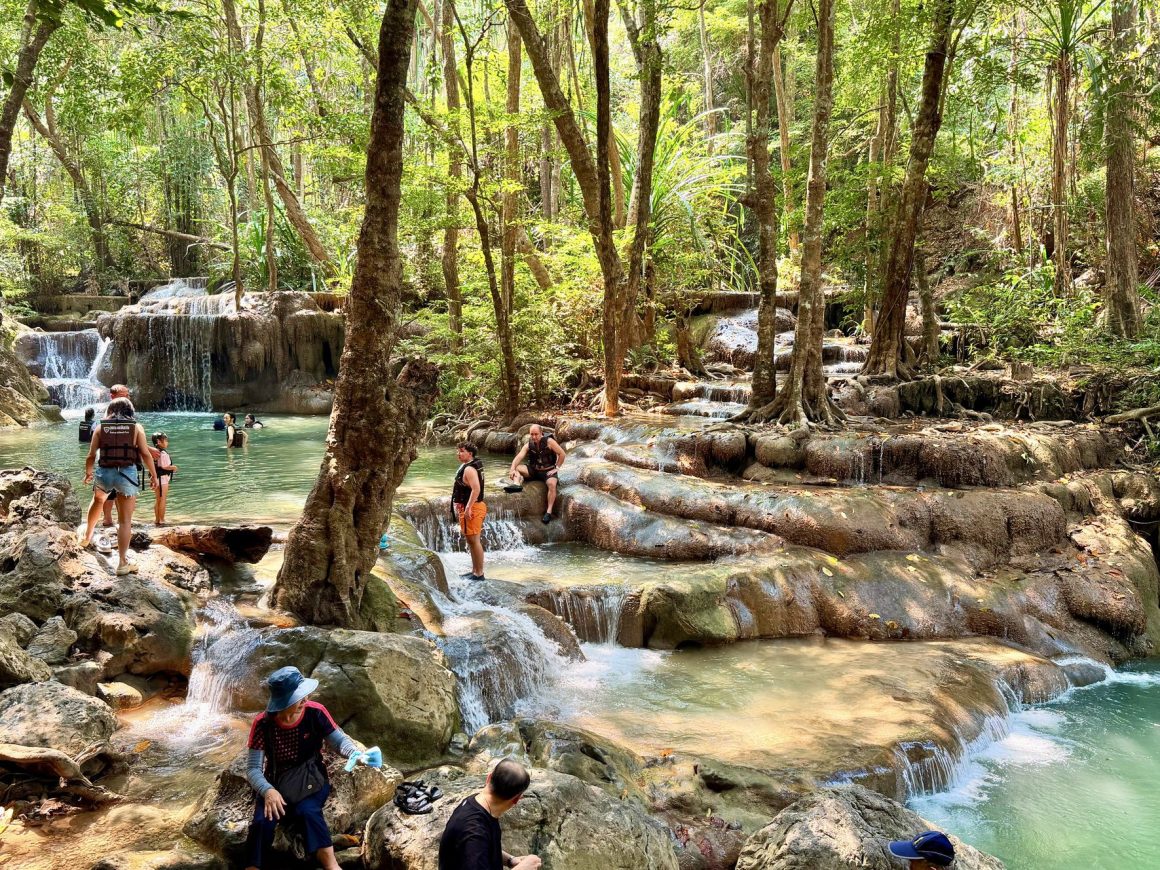
Tier 6: Dong Pruk Sa Approximately 1.75 km from the entrance.
The rocks become higher here, and the slope grows noticeably steeper. In some areas, we had to use both our hands and feet to climb. My father was breathing heavily, but he never said he wanted to stop. My younger brother walked ahead and occasionally waited for us. Sometimes our family became separated along the trail, but we always met again around the next bend.
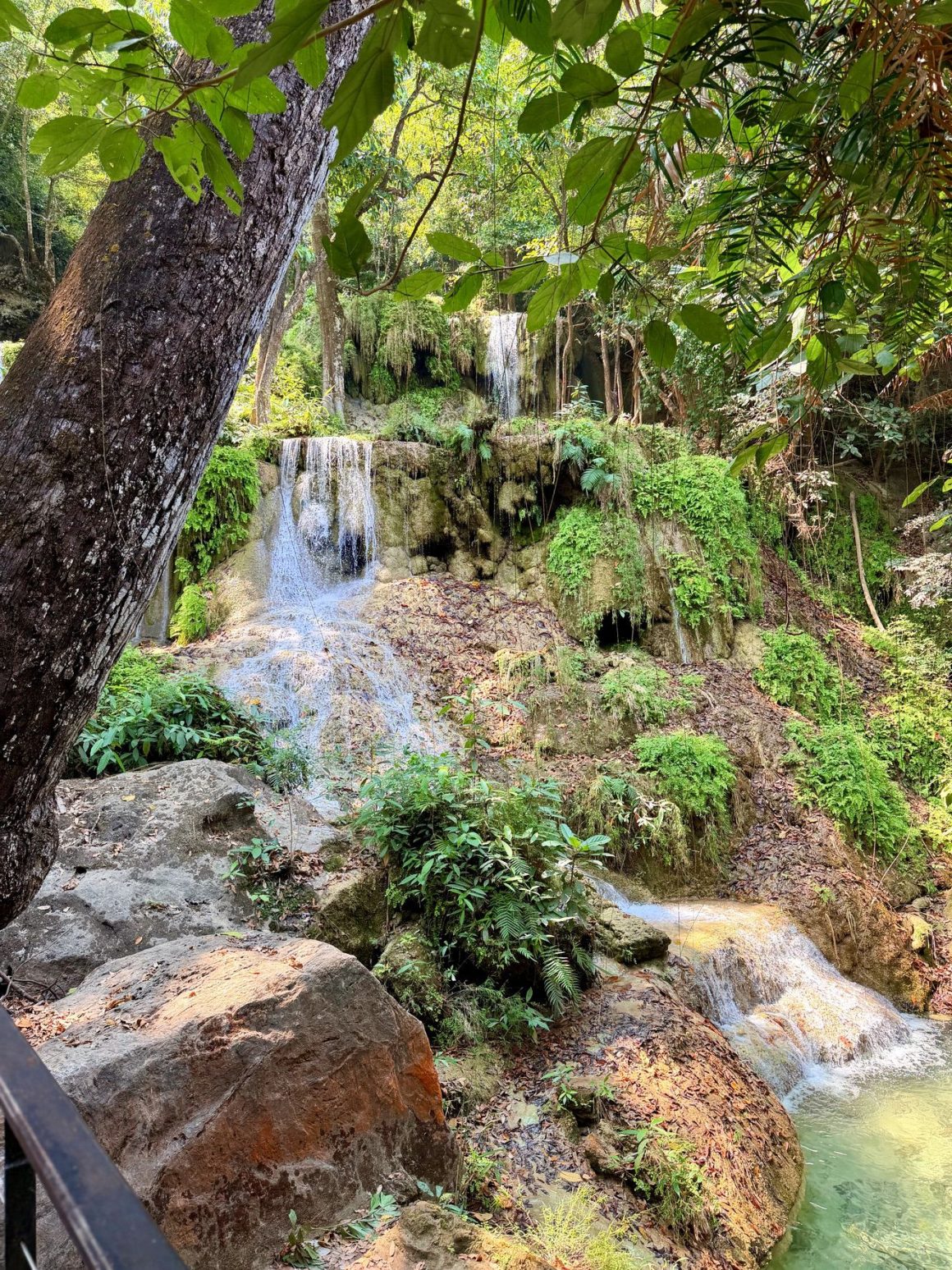
Tier 7: Phu Pha Erawan Approximately 2 km from the entrance.
This is the end of the trail and the most open and expansive tier. Water cascades down the rock face from above, forming a crystal-clear pool below. According to local legend, the shape of the waterfall resembles Erawan, the three-headed elephant from Hindu mythology, which is how the waterfall received its name.
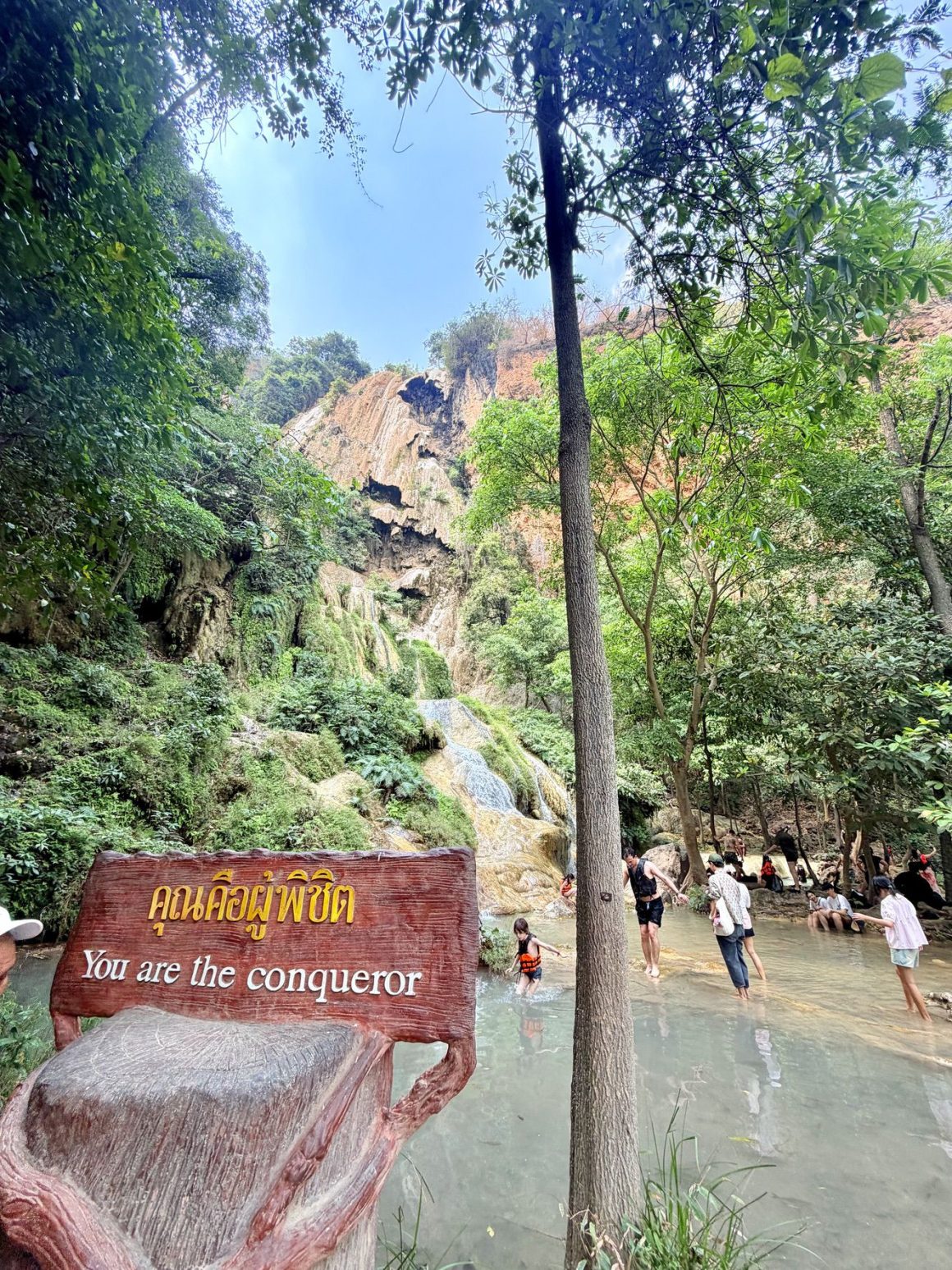
We stood beside the water without speaking for a long time. My father sat on a rock to rest, my mother wiped away her sweat with a towel, and my younger brother began setting up his camera. As I watched them, an indescribable feeling suddenly rose inside me. I wondered how many more times we would be able to walk a mountain trail together like this.
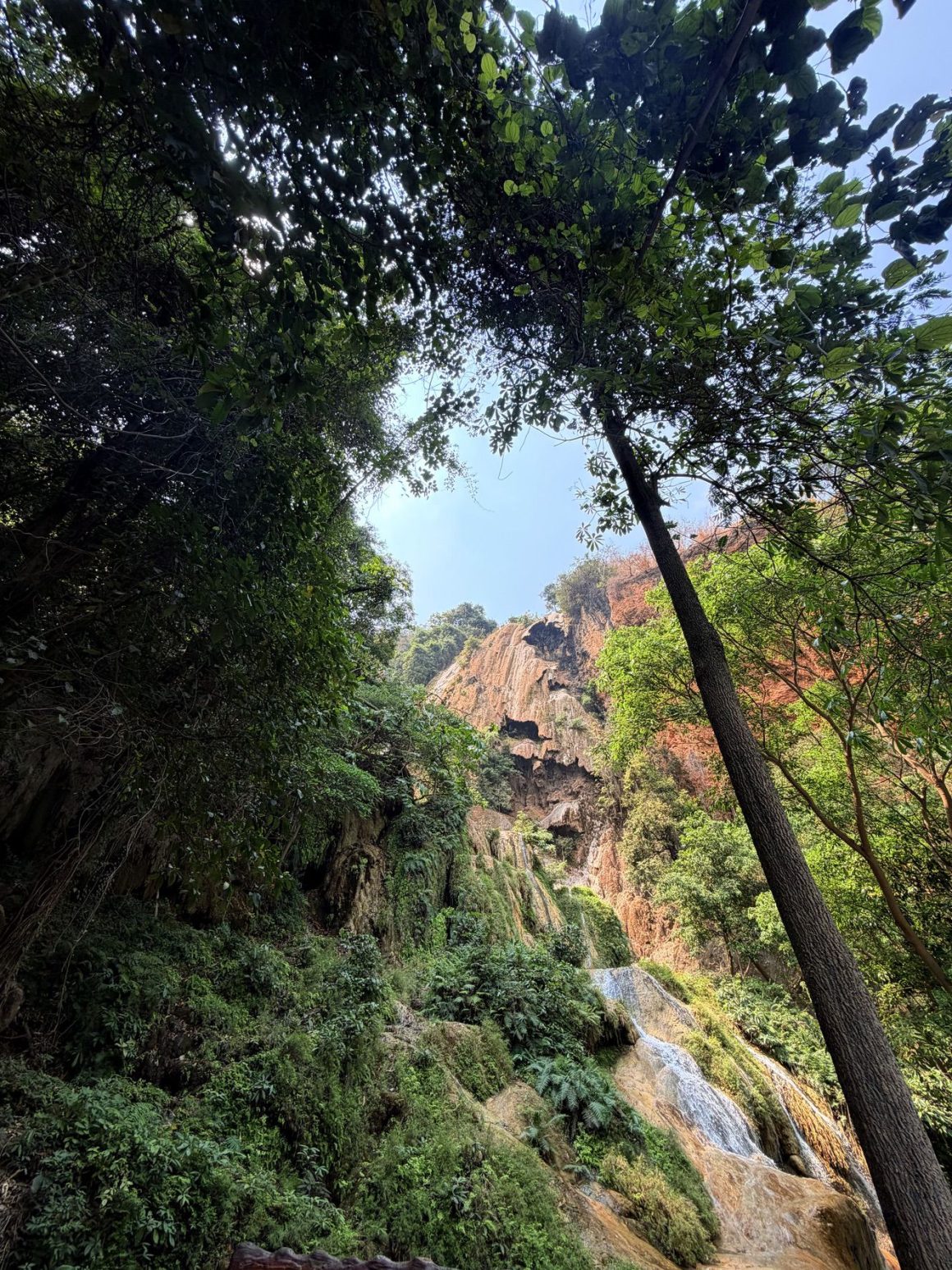
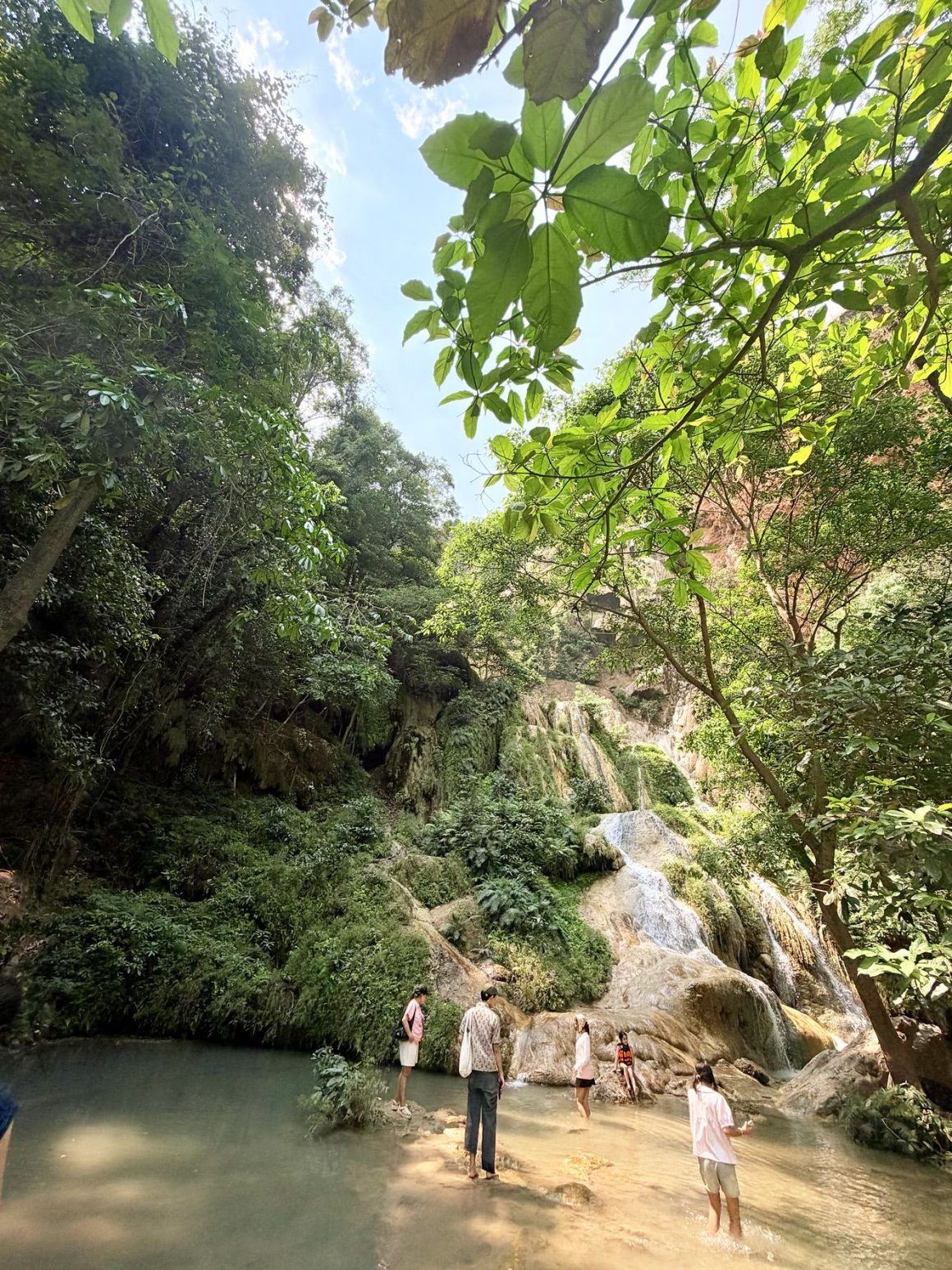
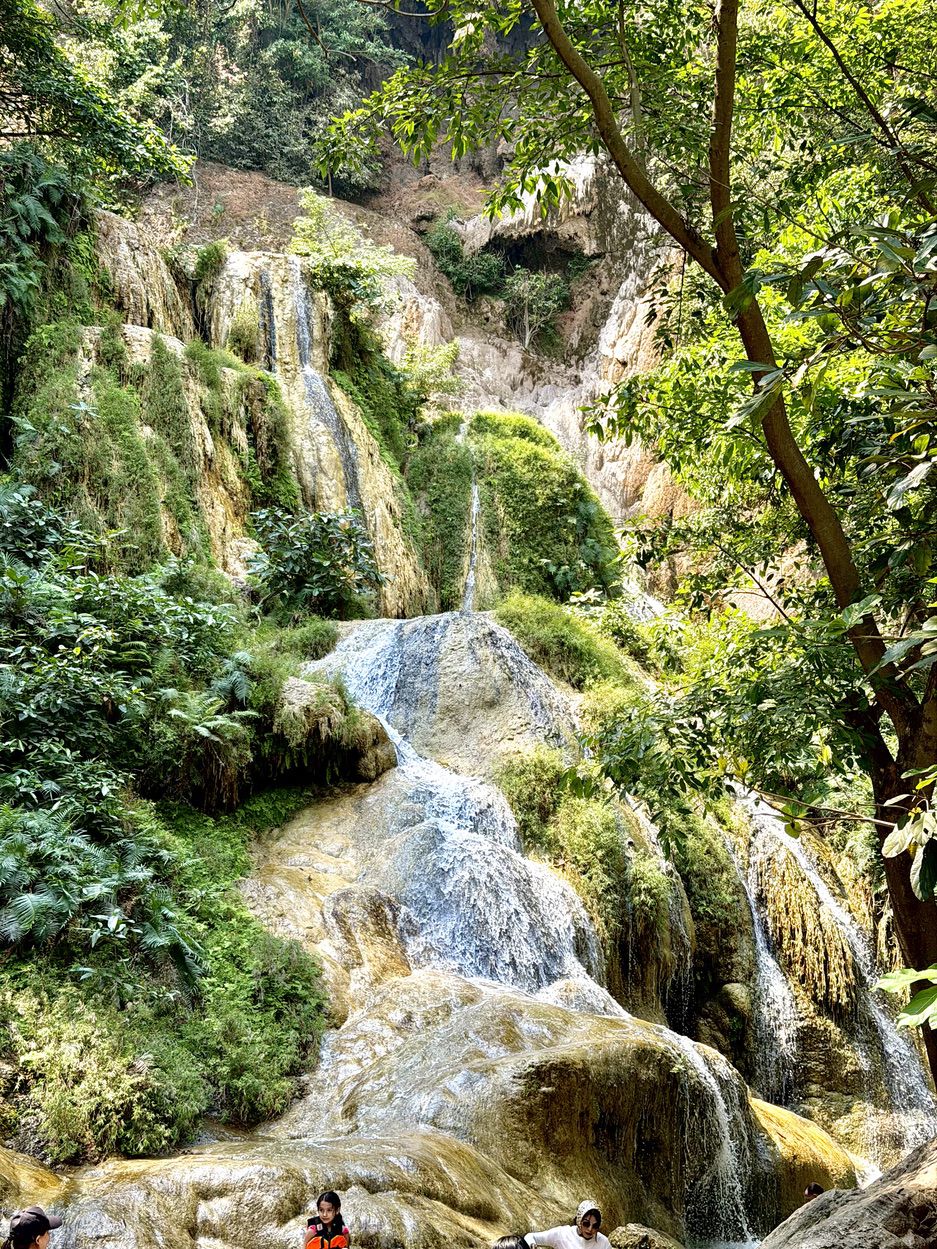
Is It Worth Going Directly to the Seventh Tier?
If your physical condition allows it, I would say yes—it is worth it. The lower tiers are certainly beautiful, but what truly stays in your memory is the second half of the journey, when you have to focus on every step. The descent can often be more difficult than the climb, requiring even greater care.
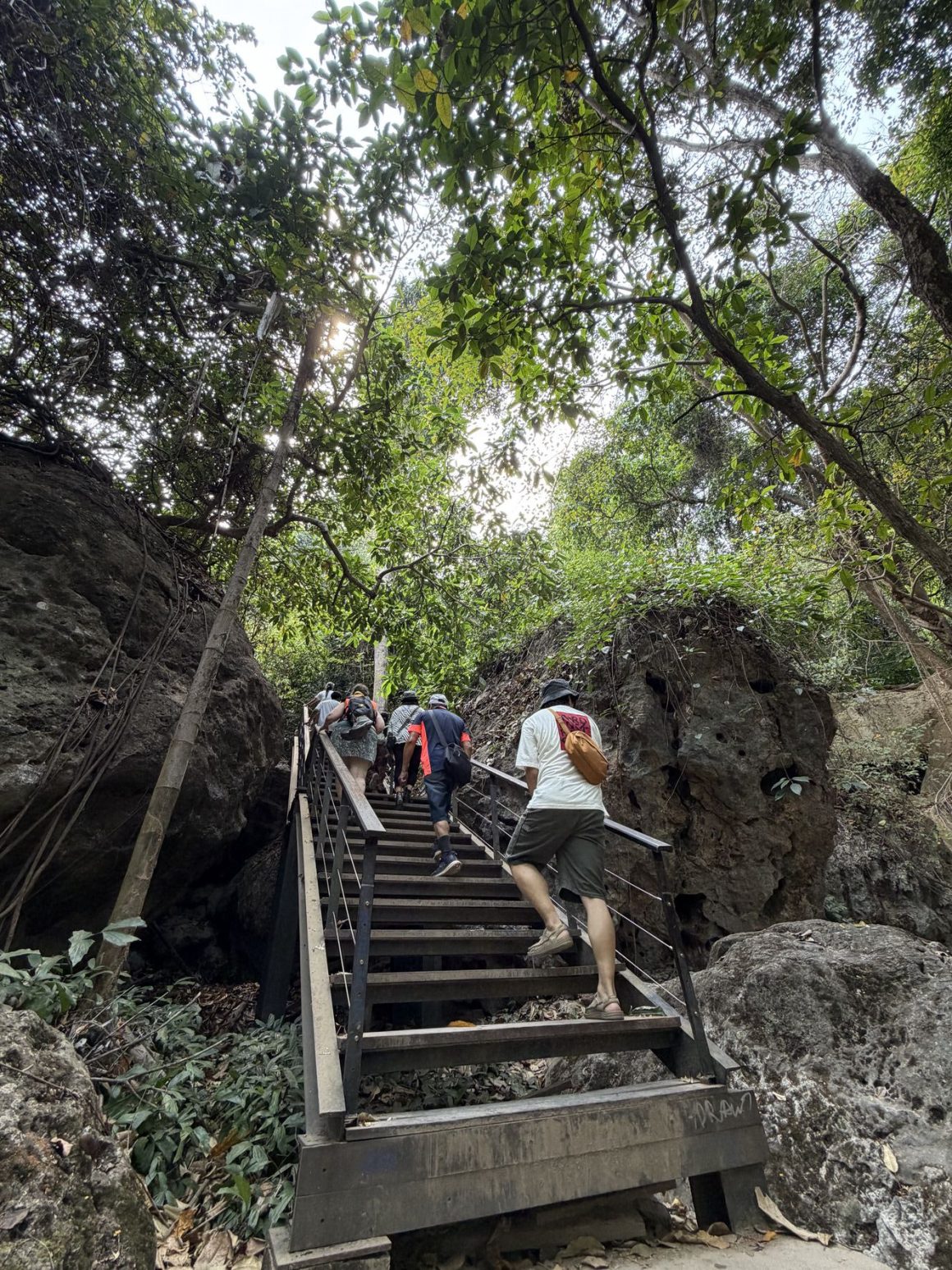
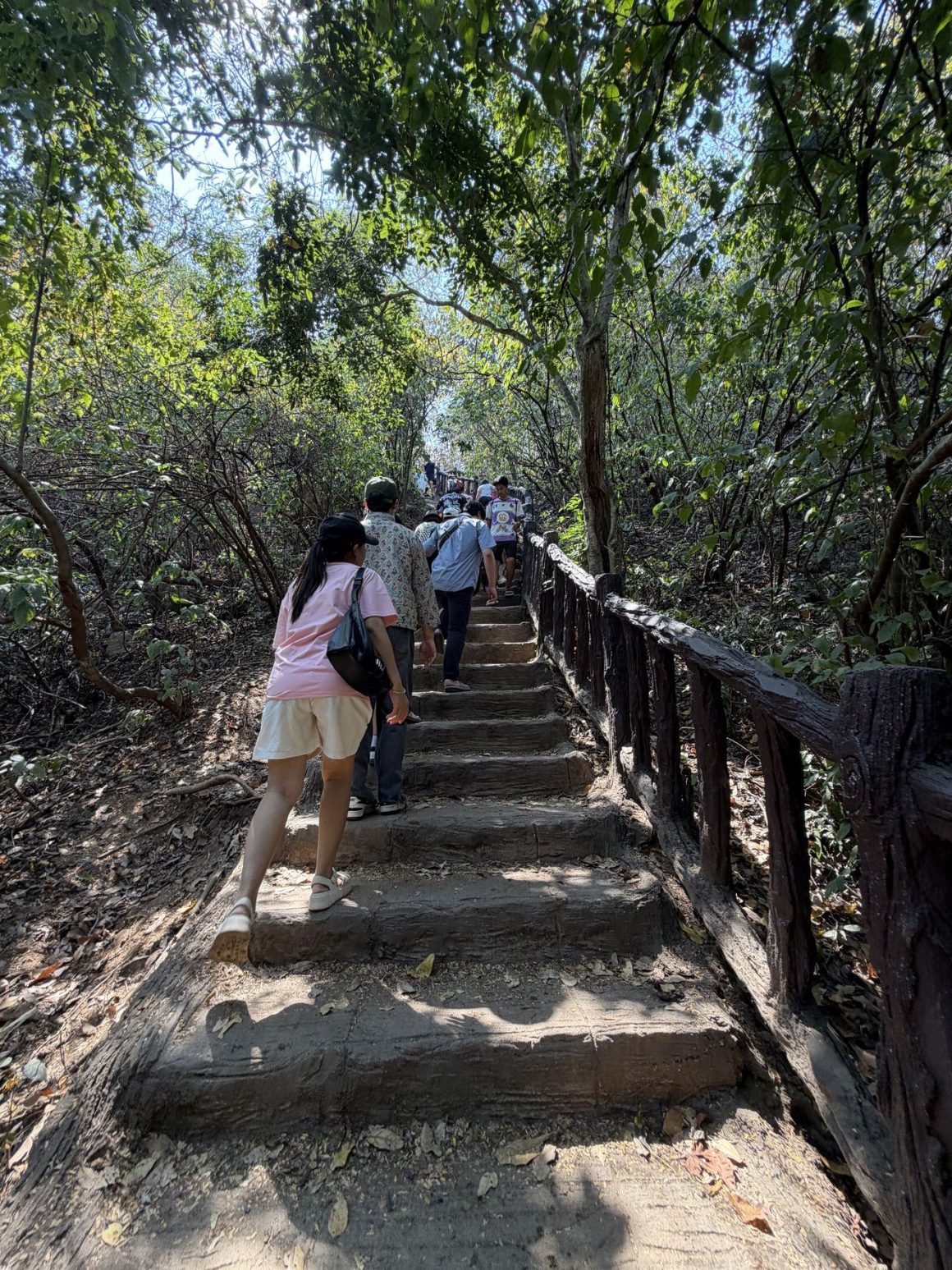
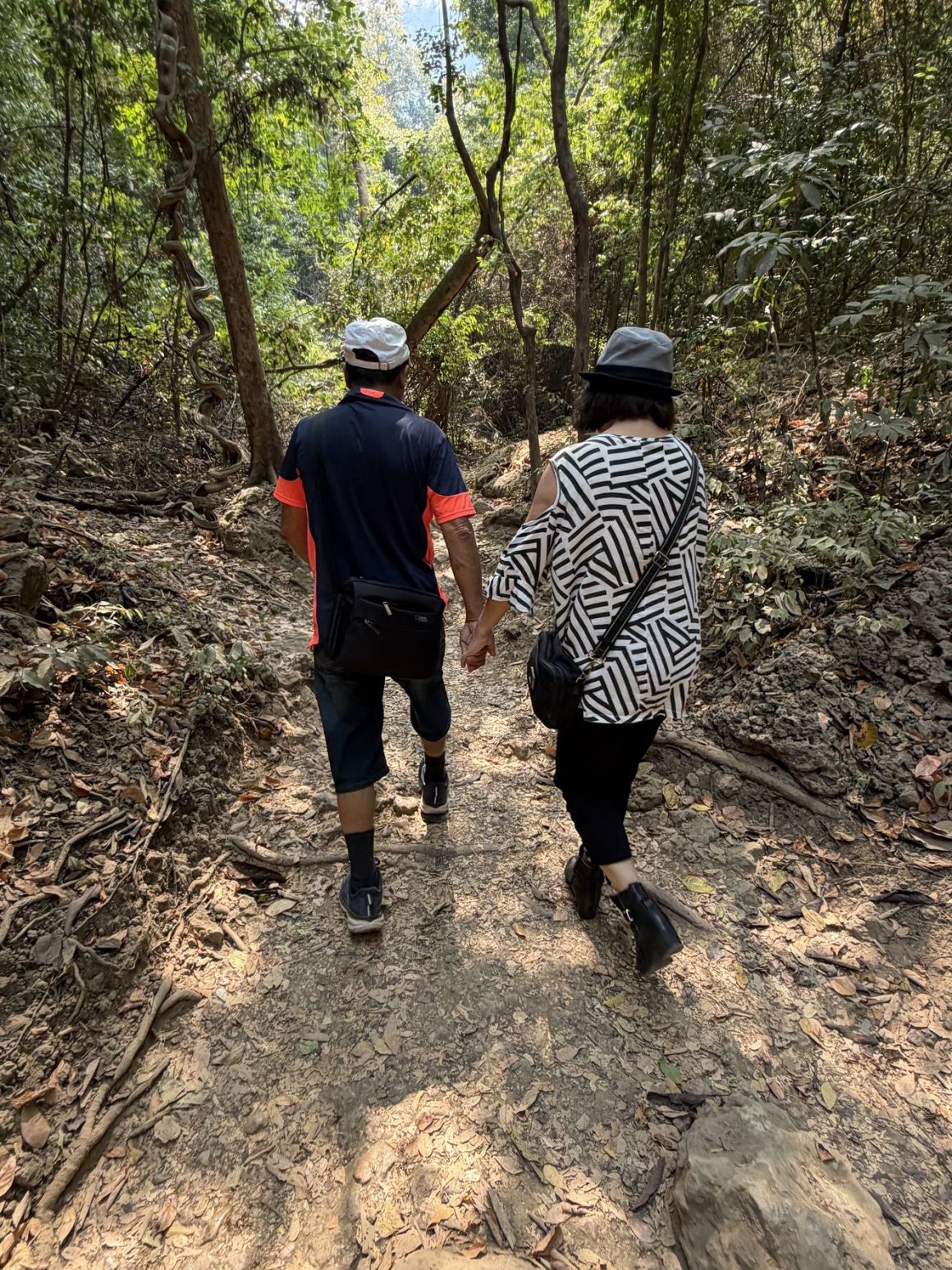
It had been a long time since we had sweated together like this.
By the time we returned to the entrance, everyone was covered in sweat. My father said, “I’m glad we made it to the top.” My mother laughed and said her legs felt as if they were about to give up. Meanwhile, my younger brother had already moved on to discussing what we should eat for dinner.
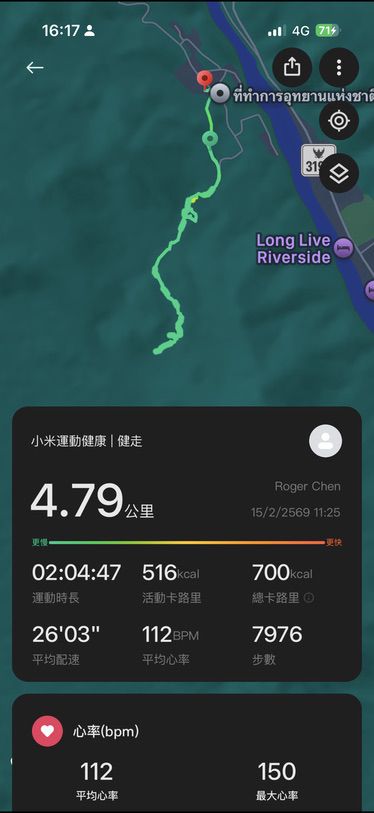
The water at Erawan Waterfall is turquoise, but what stayed in my heart that day was the sight of my family walking along the forest trail.
Kanchanaburi has many mountains and waterfalls. Yet some places quietly help us understand that landscapes keep changing, time continues moving forward, and people gradually grow older. Simply being able to walk the same path together is already a kind of blessing.