Table of contents
The day before, we stood on the Bridge over the River Kwai and watched a train slowly pass through its steel structure. The following day, we continued our journey a little deeper into history—to the Death Railway, the railway line whose name still carries the weight of the past.
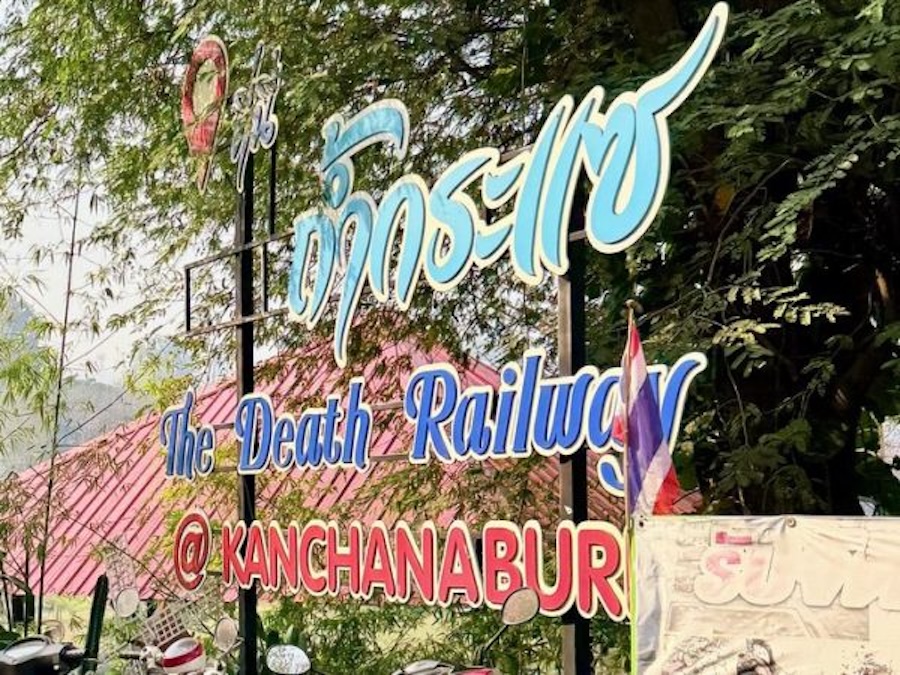
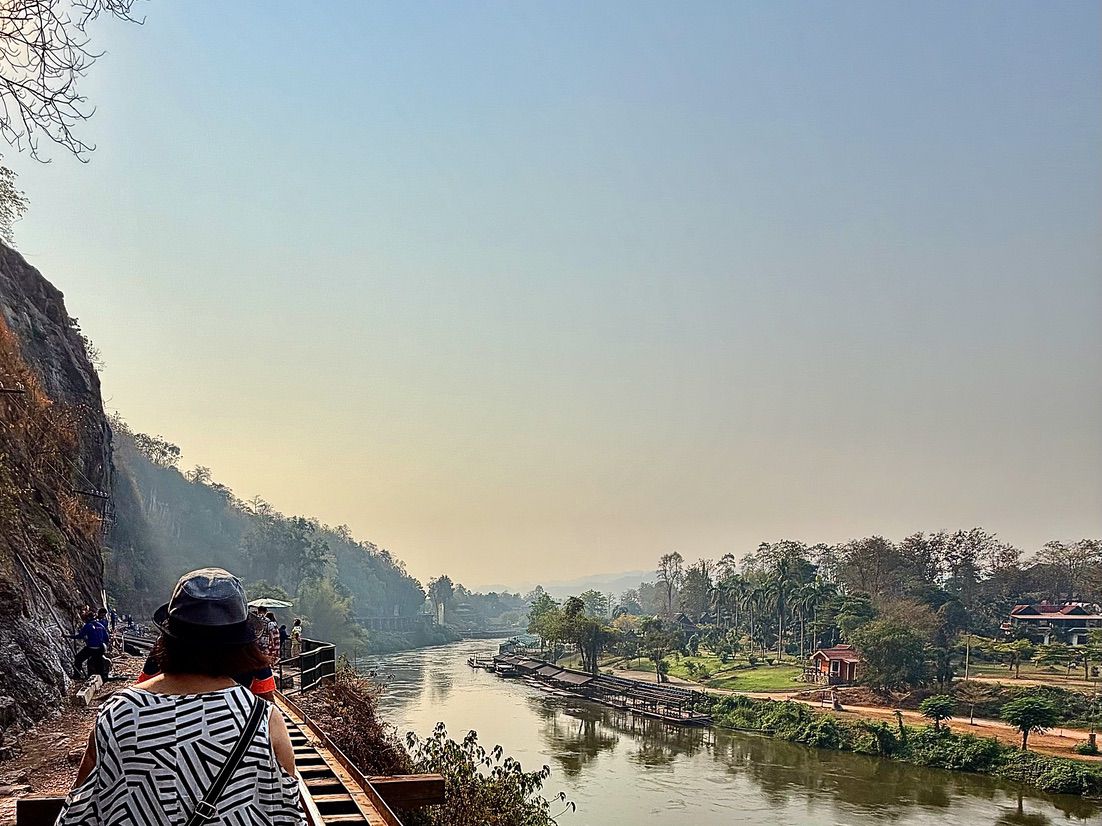
From central Kanchanaburi, it takes about an hour by car to reach the most iconic section of the railway at Tham Krasae, near the Prisoner of War Cave. This stretch was built along a steep cliff, with a wooden trestle extending closely against the mountainside and the river flowing below. It is approximately 40–50 kilometres from the Bridge over the River Kwai, making the two sites easy to combine in a one-day itinerary.
Why Is It Called the “Death Railway”?
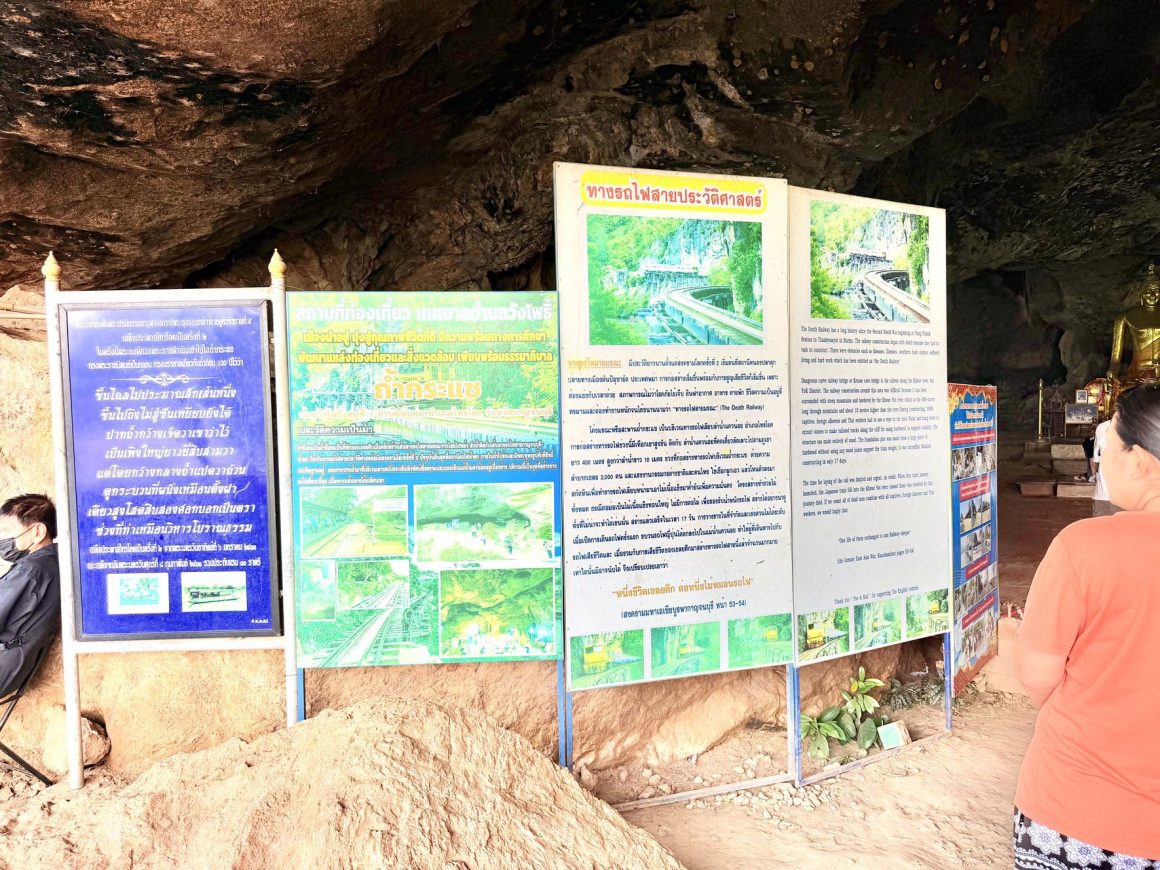
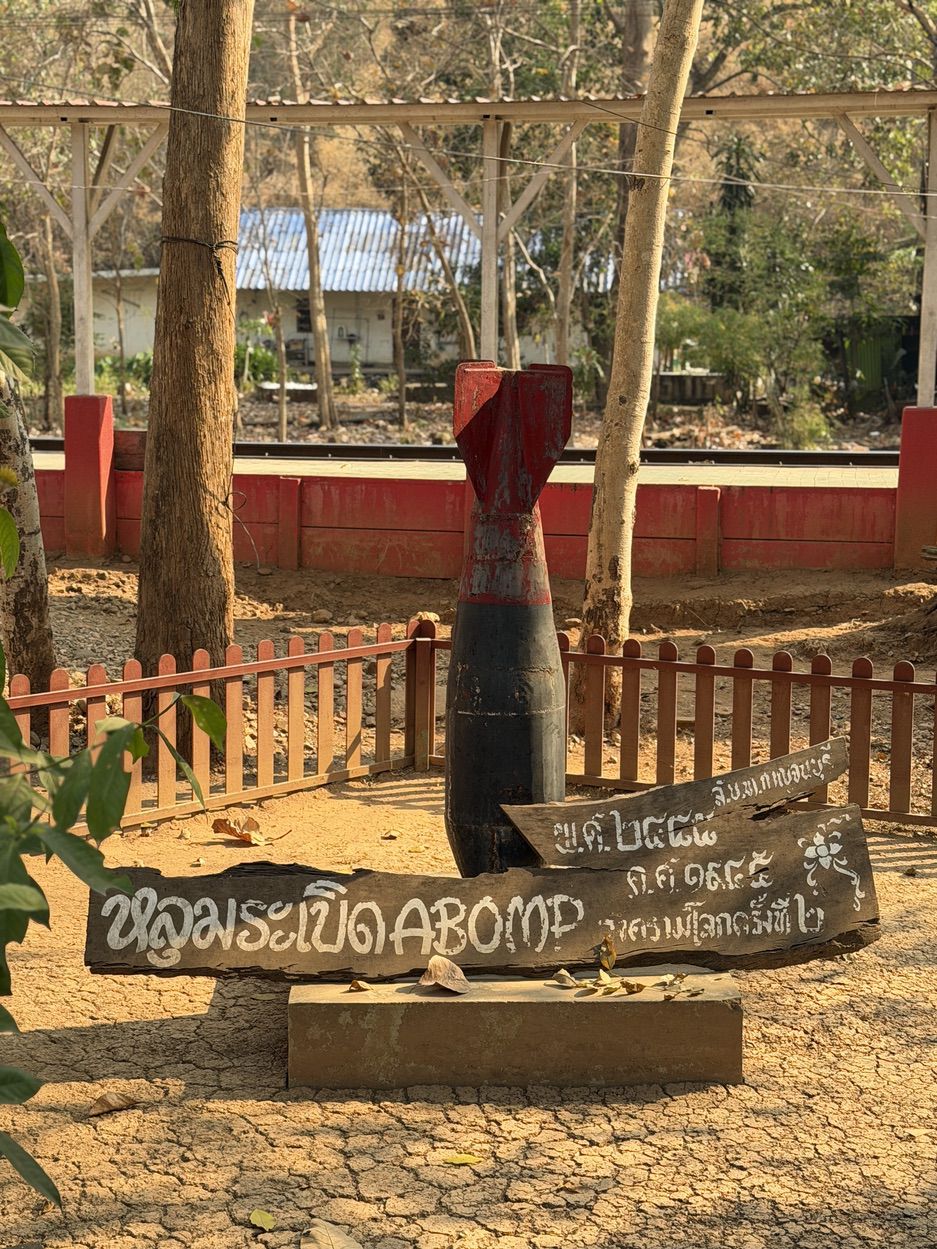
The official name of the Death Railway is the Thailand–Burma Railway. During the Second World War, the Japanese military forced Allied prisoners of war and large numbers of Southeast Asian labourers to build the railway under extremely harsh conditions. Although the railway extended for only around 415 kilometres, historical records state that more than 100,000 people lost their lives during its construction.
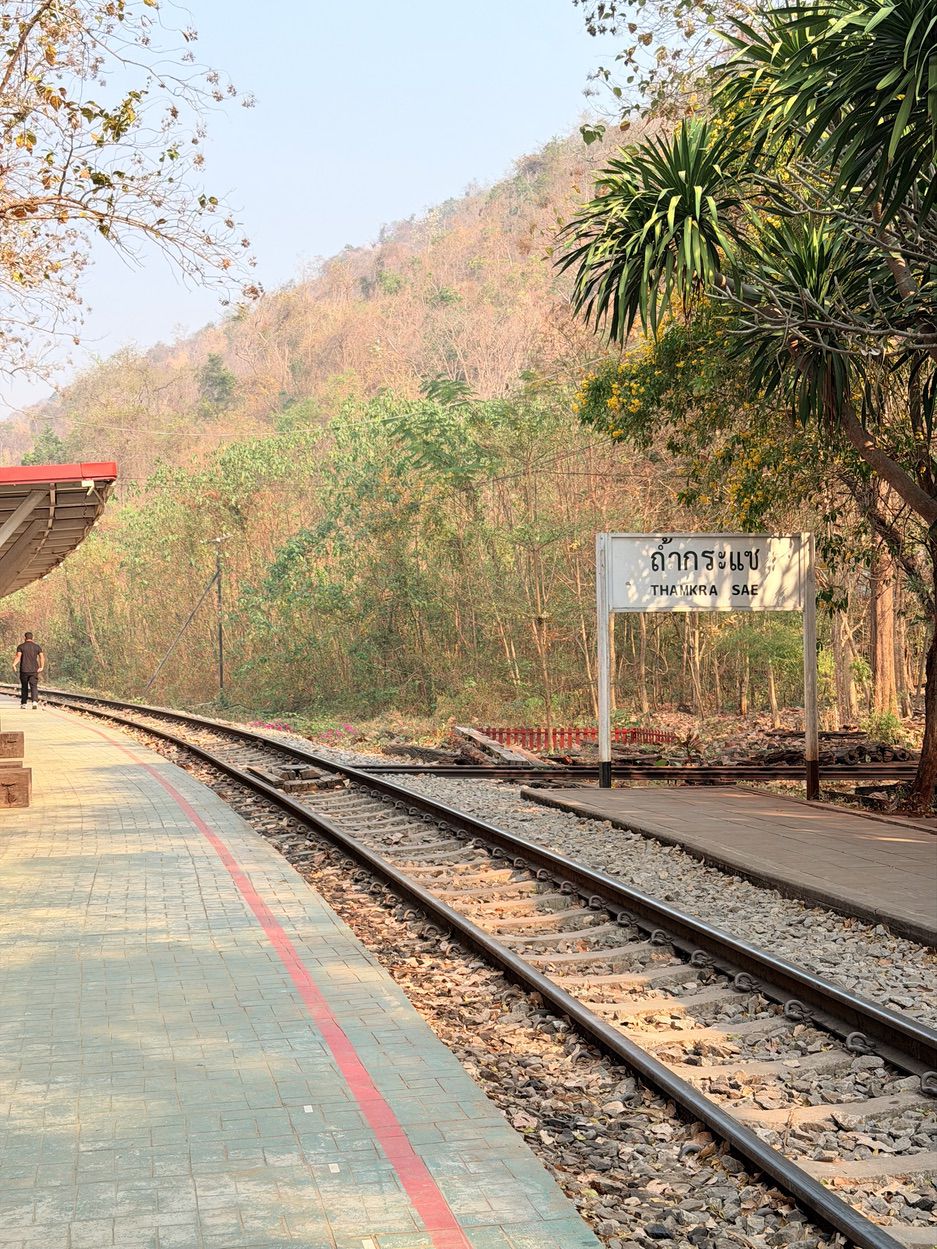
Extreme heat, malaria, malnutrition, and exhausting labour gave this railway its solemn name—the “Death Railway.”
When trains still travel along these tracks today, it is difficult not to imagine the people who once stood beneath the burning sun, striking and cutting through the rock.
The Prisoner of War Cave and Cliffside Railway
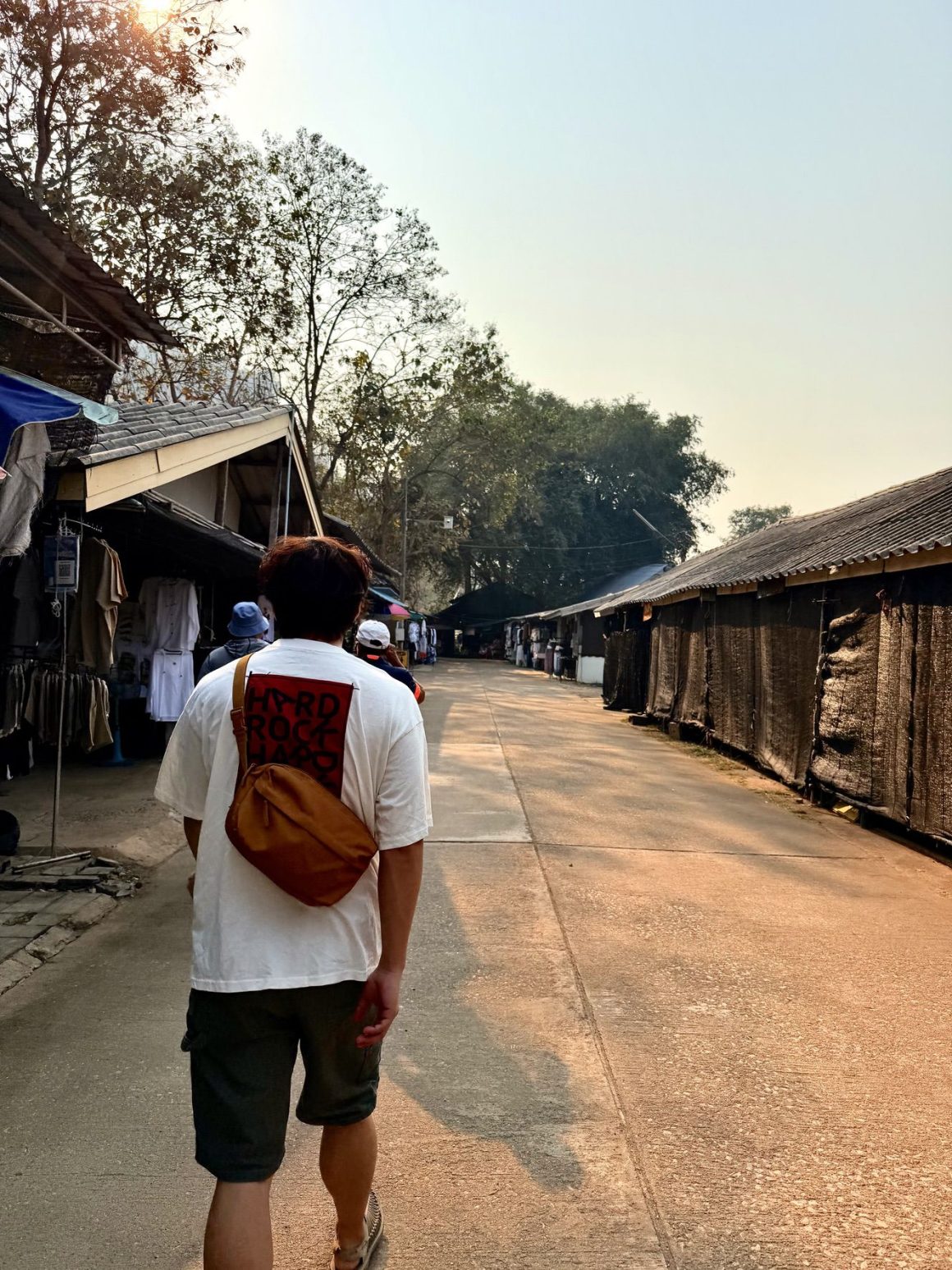
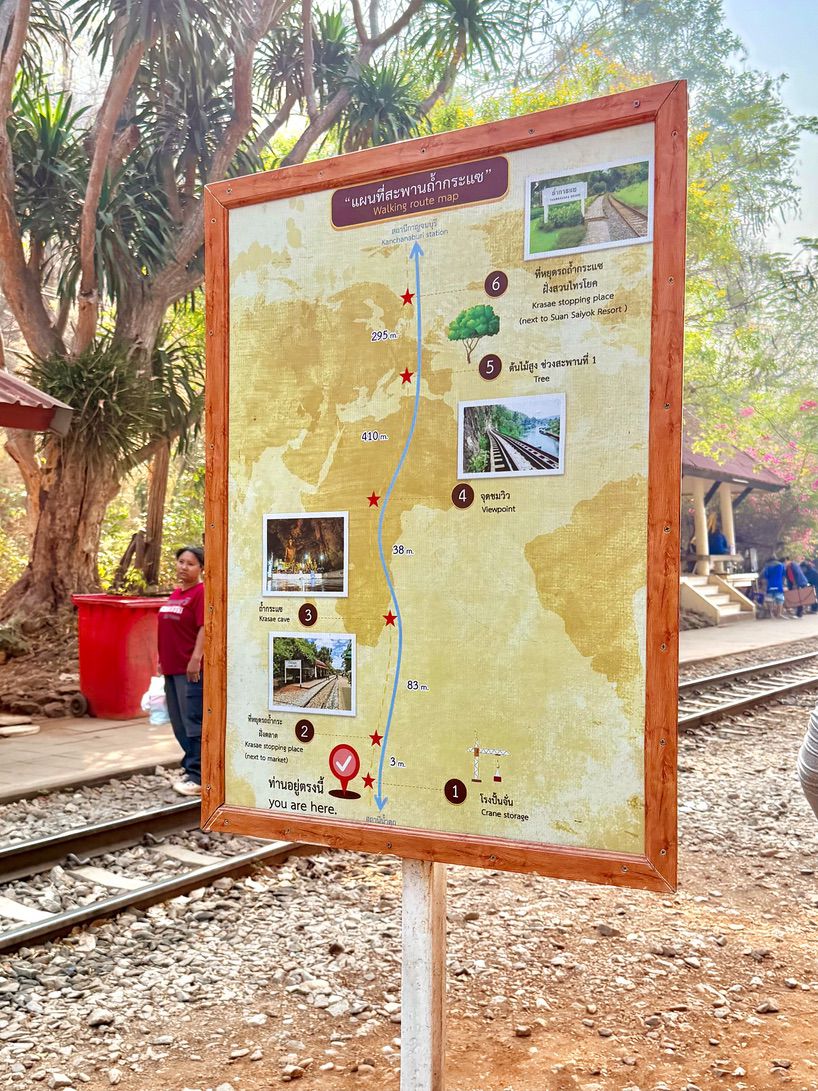
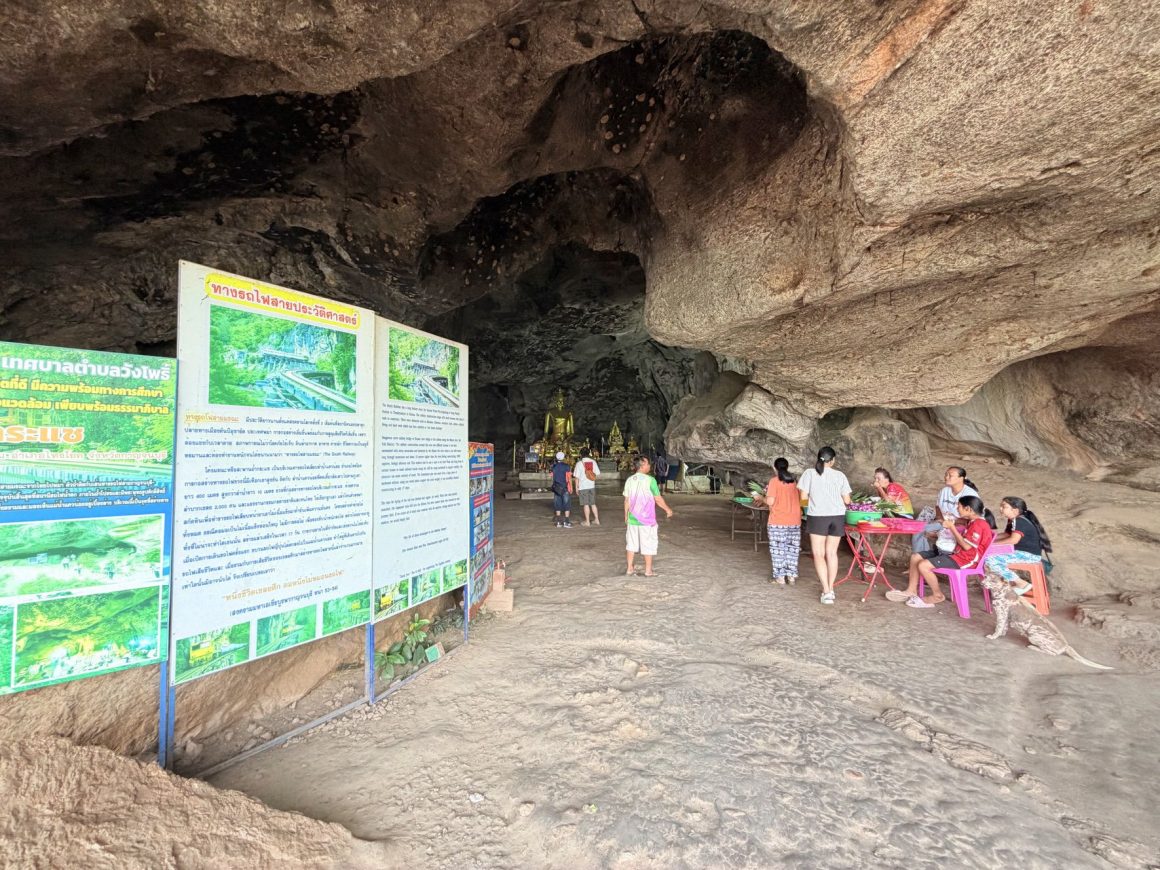
We stopped near Tham Krasae and slowly walked along the railway tracks. The wooden trestle clung closely to the mountainside, while the river flowed gently below. My mother walked with great care, and my younger brother took photographs while repeatedly turning back to remind us to watch our steps.
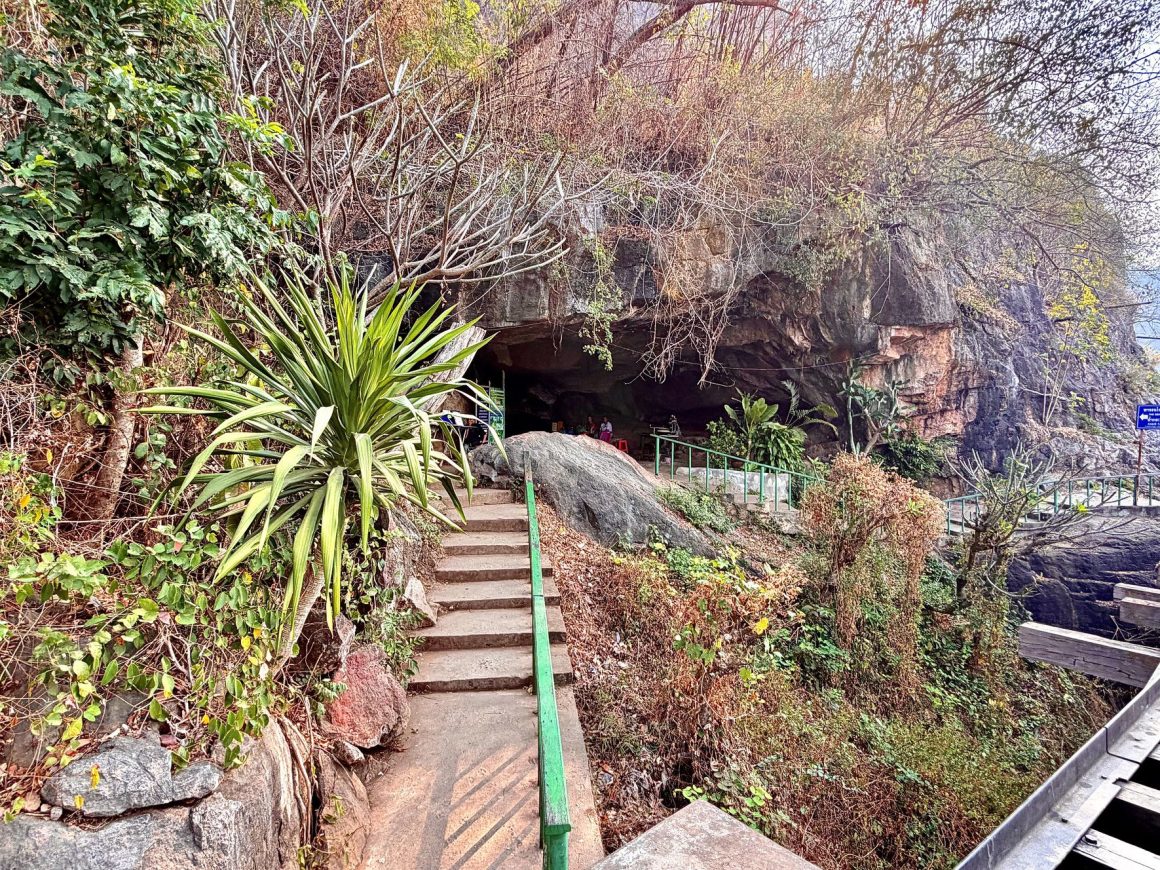
The Prisoner of War Cave is a small cave beside the railway. It is said that prisoners of war once used it as a temporary shelter from air raids or as a place to rest. The space is not large, yet it carries an unmistakable sense of the hardship and oppression of that time. Standing in front of the cave, I suddenly did not know what to say. My father fell silent as well.
Sometimes, travel is not only about seeing beautiful scenery, but also about understanding the past.
The Contrast Between Today’s Scenery and Its History
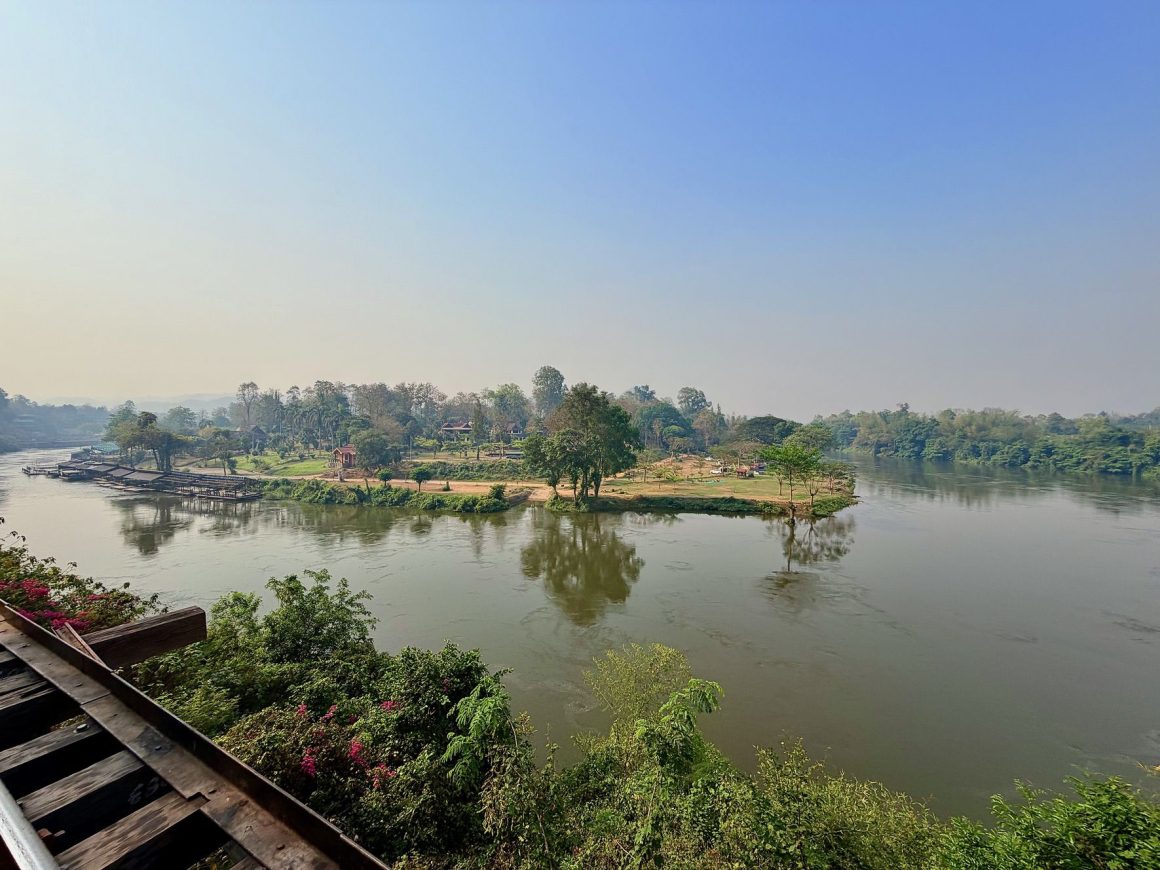
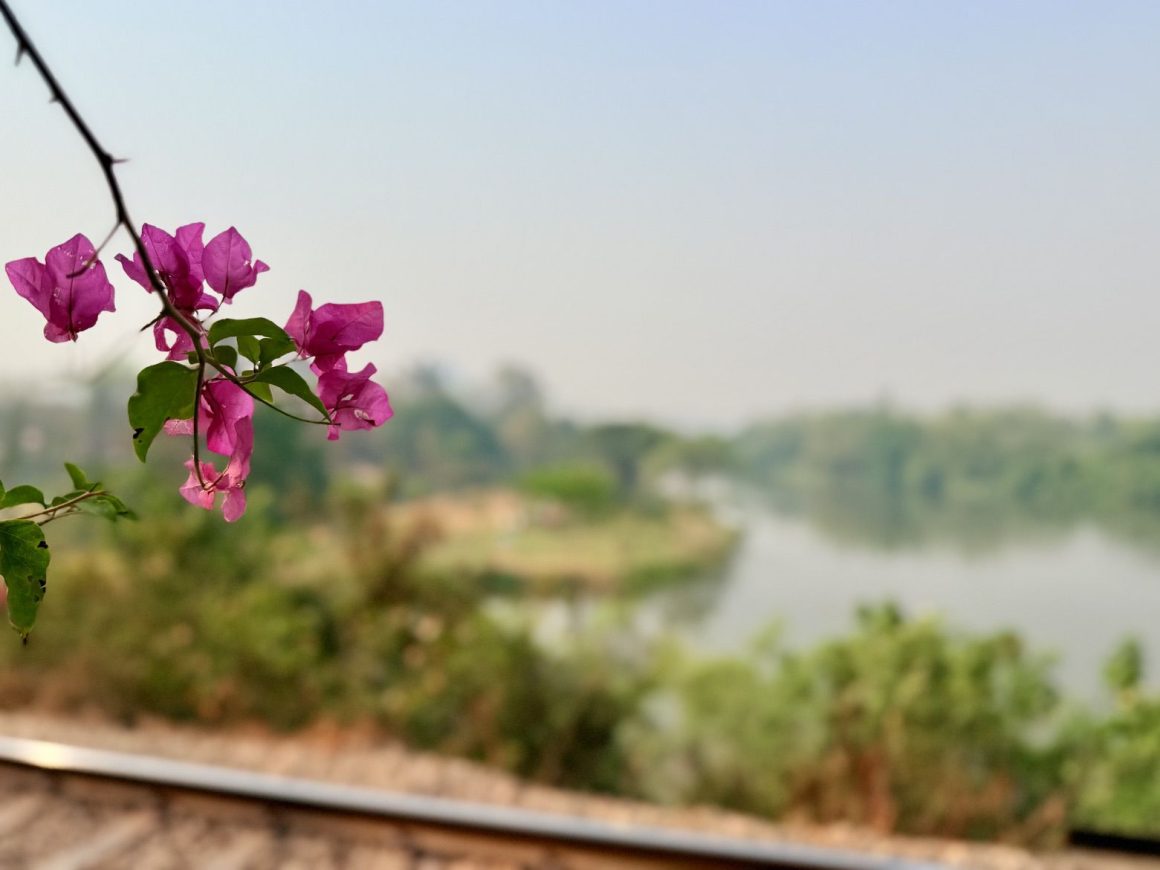
Paradoxically, the scenery here today is remarkably beautiful. The forest, river, and sky come together like a peaceful painting. Yet once you understand the history behind this railway, that beauty begins to carry a quiet weight.
From the Death Railway, you can continue driving west to Erawan Waterfall, approximately one hour away, or return to central Kanchanaburi, which also takes around one hour. For a two- or three-day trip to Kanchanaburi, the Bridge over the River Kwai and the Death Railway are usually included on the same route.
It Had Been a Long Time Since We Walked a Road Like This Together
Standing beside the railway, I suddenly realised how rare it was to walk through a place filled with history together with my parents and younger brother. In the past, our trips were always lively and full of conversation. Now, there is more quiet understanding between us. My parents walk a little more slowly than before, while my younger brother has become steadier and more mature. The three of us walked beside the tracks without saying much, simply looking into the distance together.
Perhaps this is the true meaning of travel—not simply arriving at a destination, but walking alongside one another for part of the same journey.
Is the Death Railway Worth Visiting?
If you are planning an independent trip to Kanchanaburi, the Death Railway is a place that can add greater depth to your journey. It is more than a tourist attraction; it is a living historical site. Compared with the Bridge over the River Kwai, this location offers a closer view of the environment in which the railway was built, making it easier to imagine the conditions endured by the prisoners of war.
As I looked at my parents walking ahead of me, I suddenly felt deeply grateful that we were able to share this part of the journey together in a place like this.
Kanchanaburi is filled with beautiful scenery, but some places allow us to see far more than the landscape alone.